


Fall At Home: A Serious Concern for Elderly

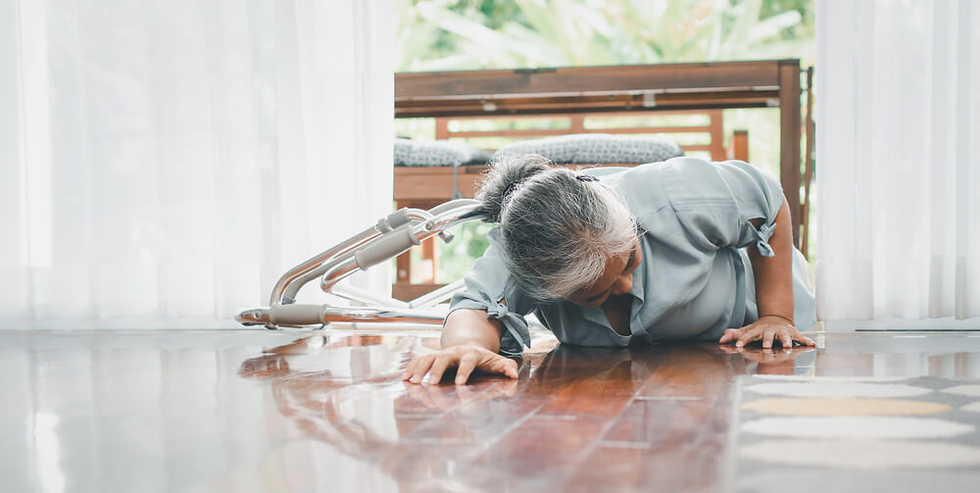
As people age, their balance and joint movement sense start to suffer. Poor balance, falls and stumbles are among the most common for the elderly in this age. Every third person aged 60 and over who lives in the community falls at home each year in India. Falls are the leading cause of injury-related prolonged hospitalizations, fractures (e.g. broken hip, broken ankle), head injuries, spinal cord injury, loss of mobility and independence, reduced quality of life, deaths, etc.
What Causes Falls?
Find your enemy, as they say. Some causes are predictable and preventable.
Health Factors: Severe health condition and disturbed mental alertness, Loss of muscle mass, grip strength and balance, mobility problems, slower reflexes, muscle weakness, poor balance and poor posture.
Social and Economic Factors: Lack or limited social support or connections
Environmental Factors (Indoor): tripping hazards, such as clutter and inadequate lighting.
Environmental Factors (Outdoors): Uneven sidewalks or pathways, Steps without handrails or marking on the edges, or building design/maintenance. Lack of accessible, safe housing and transportation.
Tips to control falls at Home?
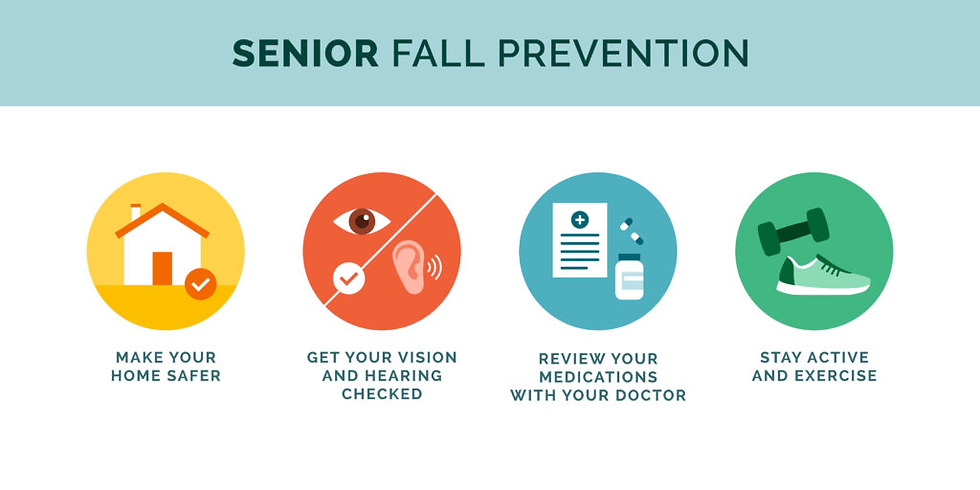
1. Keep your body active:
Get regular exercise, especially walking.
Do exercises to strengthen the muscles.
5-6 hours/Week Moderate to vigorous-intensity aerobic physical activity
Do a variety of activities that improve strength and balance (lifting light weights, tai chi), endurance (walking, dancing) and flexibility (tai chi, stretching).
Contact a phisotherapist to find the best type of exercise program for you
2. Make your home safer
Wear shoes with non-skid soles
Use night lights in your bedroom, bathroom, hallways and stairways.
Remove throw rugs or fasten them to the floor with carpet tape.
Tack down carpet edges.
Have grab bars put in your bathtub, shower and toilet area.
Have handrails put on both sides of stairways.
3. Do regular check-up
Check every year for vision changes, cataracts, glaucoma and other eye problems.
Checked Hearing every two years
See your doctor right away if you feel dizzy, weak, or unsteady on your feet, if you feel confused, or if you fall.
If your doctor wants you to use a cane or a walker, learn how to use it—and then use it all the time.
Don’t smoke.
Limit your alcohol intake to two drinks or less a day.
FAQs
Q 1 – What should I do if I fall at home?
You should firstly calm down and not panic and then check. If you are injured, call for medical help and if you are not injured then use the correct method to get up by rolling on one side and then getting up.
Q 2 – What are the 3 types of falls?
Falls are classified into 3 categories
1. Accidental Fall- Slippage in Bathroom or stairs, accident, etc
2. Unexpected physiological Fall- Fainting, seizure, dizziness, etc
3. TExpected Physiological Falls- Recurrent Falls, high fall risk activities, etc
Q 3 – Where do most falls occur in the home?
Most falls occur in areas where there is a bathroom, hallways, stairs, elevation, slippery slope, less space to walk, etc.
Q 4 – What causes falling down?
The exact cause of falls is unknown, it depends on multiple factors includes problems in balance and walking and the medical condition of the person.
Q 5 – What should you do immediately after a fall?
Immediately check for pain and injuries that might have occurred.
Q 6 – What should you look for after a fall?
Immediately look for help or try holding some steady support to stabilize yourself.
Q 7 – How long will I be sore after a fall?
Soreness may be present depending upon the injury that occurred due to the fall.
Q 8 – Should I go to the doctor after a fall?
Yes, you must visit the doctor as soon as possible so that the examination and the required treatment are done at the right time and there are fewer complications.
Q9 – Why do the elderly die after a fall?
The Elderly can die after a fall for many reasons like any internal bleeding, head trauma, major bone fractures, etc.
Q 10 – What to watch and look for after an elderly person falls
Firstly check the consciousness level immediately after a fall then check for the vital signs like blood pressure, heart rate and also for any bruises, injuries, or any other symptom.
Q 11 – What to do when an elderly person falls and hits their head?
The most important is to visit the physician to make sure that there is no head injury taken place and there is no internal damage. Next, you can always take the necessary precautions.
Q 12 – Is falling a sign of dementia?
Somehow yes, falling more frequently is a sign of dementia but not a diagnostic criteria
Q 13 – How do you help a person get up from a fall?
Firstly check for injuries then help him to roll one side, help to come on their hands and knees, give any sturdy object to hold then putting weight on the hands slide one foot and come to a straight position and come up by pushing upwards slowly and steadily.


Comments